A custom website, bookings or your own tool: with AI, smaller projects pay off too
With AI tools, custom development pays off even for smaller projects. Instead of an off-the-shelf solution you have to prop up with various workarounds, you can have a website, a booking system or a private tool that fits exactly what you do. We show this with examples from our own work.
 Libor ZapletalNovember 17, 20266 min read
- Web
- Next.js
- Node.js
- Self-hosted VPS
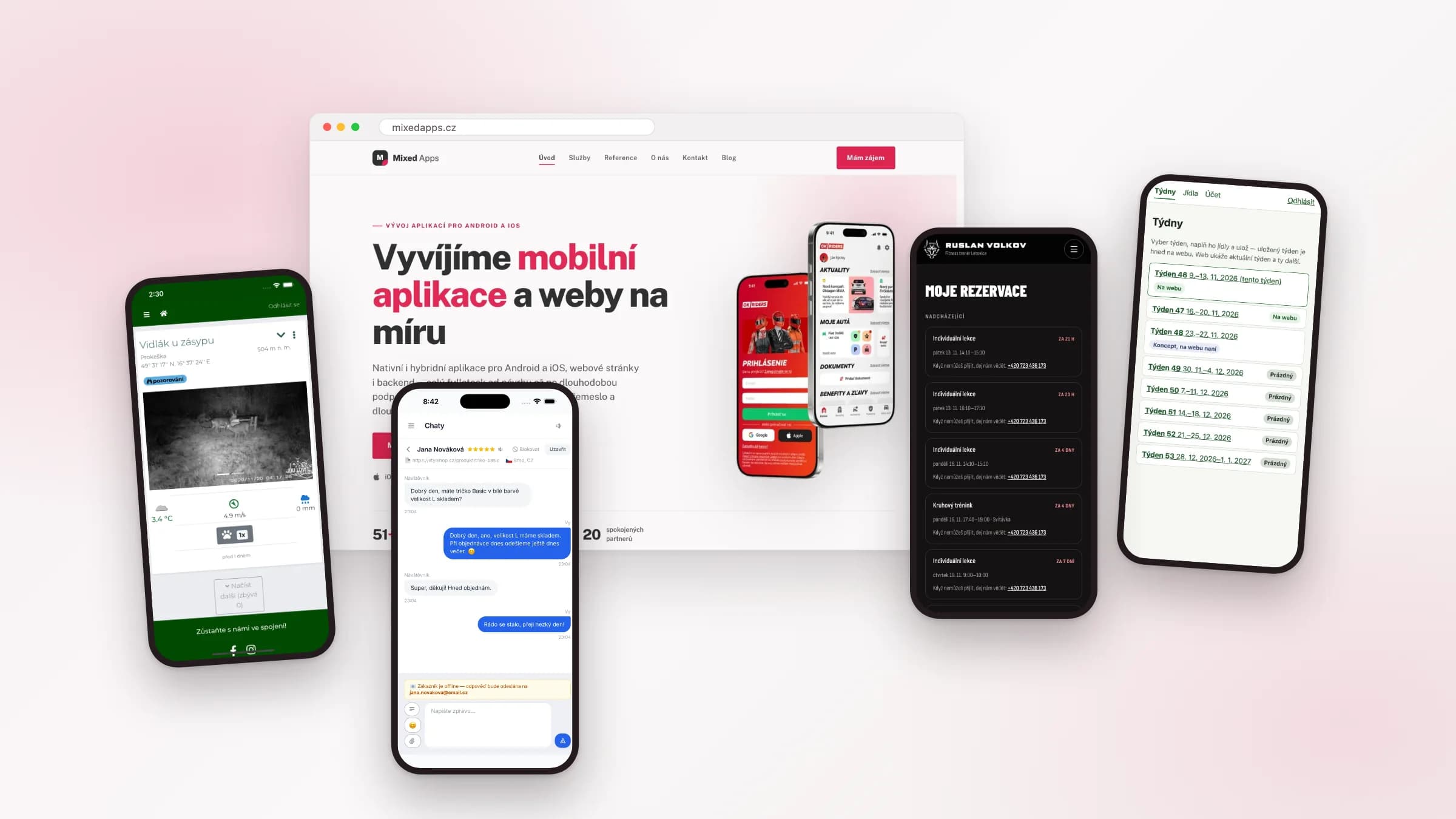
Until recently, a website or app built specifically for you was mostly worth it for large companies. Everyone else picked an off-the-shelf solution and adapted to it. With AI tools, development is faster, so today it pays to custom-build not just a website but a simpler system too: bookings, an admin tool or a tool that saves repetitive manual work.
You don't have to be a big company. A custom solution also makes sense for a sole trader, a trainer or tutor, a small shop, a sports club, an association or a community around a shared hobby. You can start with a small first version that works exactly the way you need and expand it step by step.
This follows on from our article A more affordable custom website without WordPress, where we described how we build websites with Next.js and run them on our own server. Here we look at what else can be built on the same foundation.
When an off-the-shelf solution doesn't quite fit
Off-the-shelf solutions are made for as many customers as possible at once: a website template, a general-purpose booking service, boxed software or a shared spreadsheet. They are often enough to start with. But the more your needs differ from the average, the more you have to work around them. Missing features are added with another module or a paid add-on, part of the work is done by hand outside the system, data is retyped from one place to another, and the template is bent with various tricks to look and work the way you need. Each of those tricks then has to be watched with every update.
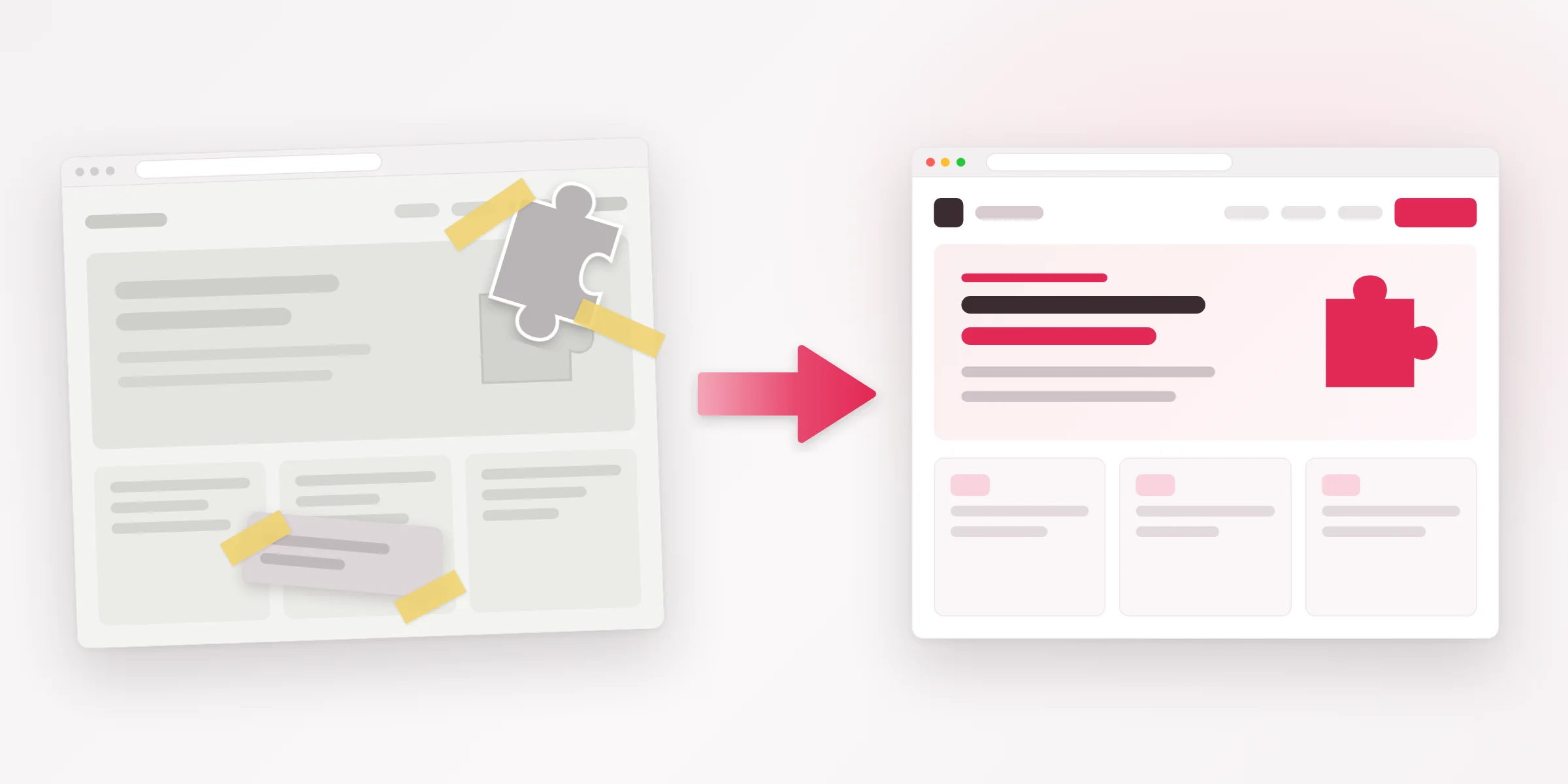
A custom solution does what you need, and it can be changed at any time. You don't have to adapt to the way someone else imagined it, or come up with makeshift fixes.
Your own website instead of a hosted service
Moving to your own website is often simpler than it seems. A static website, meaning one without a database or logins, is the easiest to move. Fitness trainer Ruslan Volkov's website ruslix-pro.com ran on Netlify. We moved it under our own management and have been extending it ever since: it gained a page for healthy meal boxes with a weekly menu and a link to bookings. If your website runs on Webnode, on WordPress with a purchased theme or on another hosted service, we take over the copy and images and rebuild it, including redirects from the old addresses, so visitors coming from old links and search engines don't end up on an error page.
The website's pages are prepared in advance, when a new version is built, so they load quickly even on a phone. Running it can cost less than a subscription to a hosted service or web hosting, especially when the server runs several websites or apps. We covered what running your own server involves in our previous article.
Bookings, admin tools and other web apps
Apps with logins, a database and notifications are built on the same foundation as the website. A general-purpose booking service has to suit a hair salon, a doctor and a sports club all at once, whereas custom bookings follow your rules. This is how we built two apps for Ruslan:
- A booking system where clients sign up for training and the trainer has an overview of every session. It keeps track of capacity and the minimum number of participants and records late cancellations. Clients add it to their phone's home screen as an app and get reminders, without the App Store or Google Play.
- A meal box menu, a small admin where the weekly menu is put together on a phone and appears on the website with one button.
Both apps started with a simple first version that could be used right away. What else was needed only became clear in everyday use: the menu, for example, gained calories, meal photos and a choice of salads. That's how custom apps work: you don't pay for features just in case, but for what proves genuinely useful in practice.
Private tools just for you
Not every app has to be visible to the outside world. Often what helps is a small tool used only by the owner or a few people in a company or association that does one job for them. For example, it can:
- replace a shared spreadsheet where several people retype the same data,
- transfer orders or data from one system to another,
- turn a spreadsheet into a printable price list, quote or menu,
- send a weekly summary of what needs to be done,
- check that nothing is missing on a website or in an app.
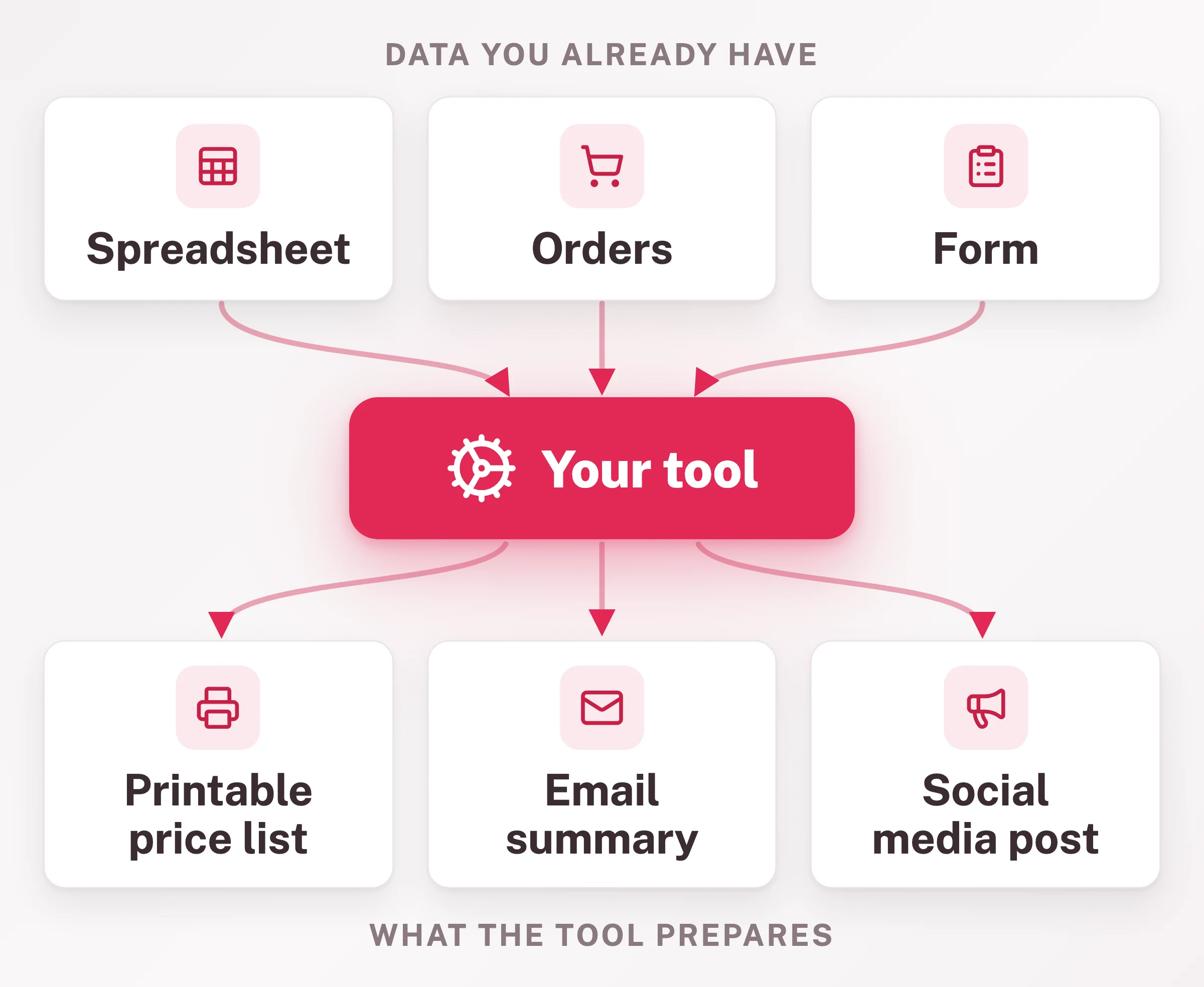
We use tools like this ourselves. For example, we publish posts about new case studies and articles on LinkedIn and Facebook with our own script, which sends them at a set time. The meal menu admin is really a private tool too: only the trainer sees it, and only the finished menu goes public.
What AI does and what stays with us
Today, AI writes much of the code itself based on our brief, from routine parts to new features. That lets us deliver the first version sooner and add more features for less. But we are responsible for the result. We design how the app should work and how it will be built. We go through and review the code AI produces, test it and verify that the app works correctly, is secure and that the whole solution holds together. We also take care of backups, updates and further development. Faster development doesn't mean lower quality.
Have an idea for a custom website or tool?
Tell us what slows you down today, what you have to work around in an off-the-shelf solution, or what your website should be able to do. We'll suggest what a first version could look like and what it would cost.

Builds our apps for iPhone and iPad. He saw the potential of Apple's platforms and has focused on iOS development ever since.
More about the team →Related projects
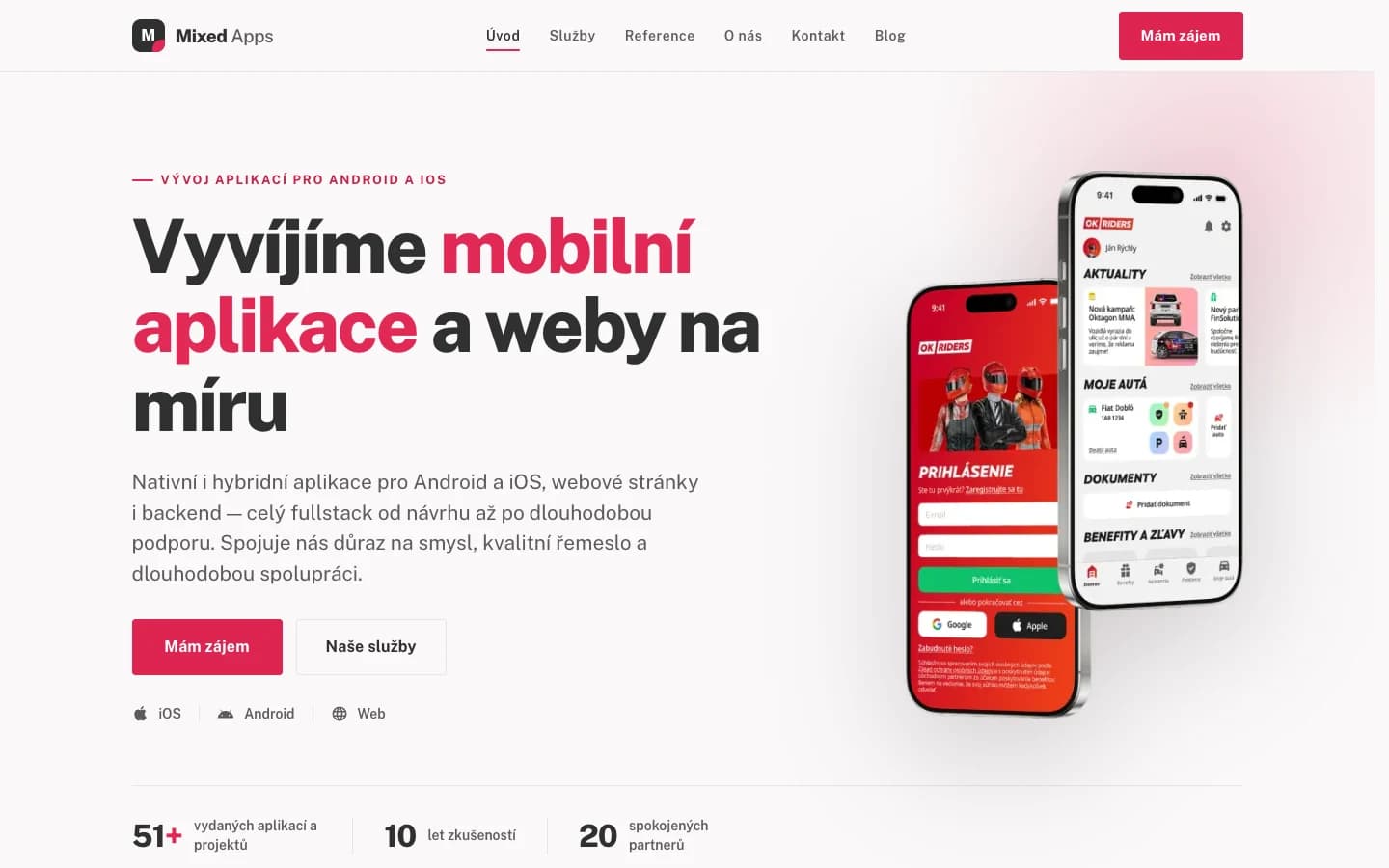
MixedApps — studio website
A custom company website in Next.js: services, portfolio and blog, running on our own VPS.
View project →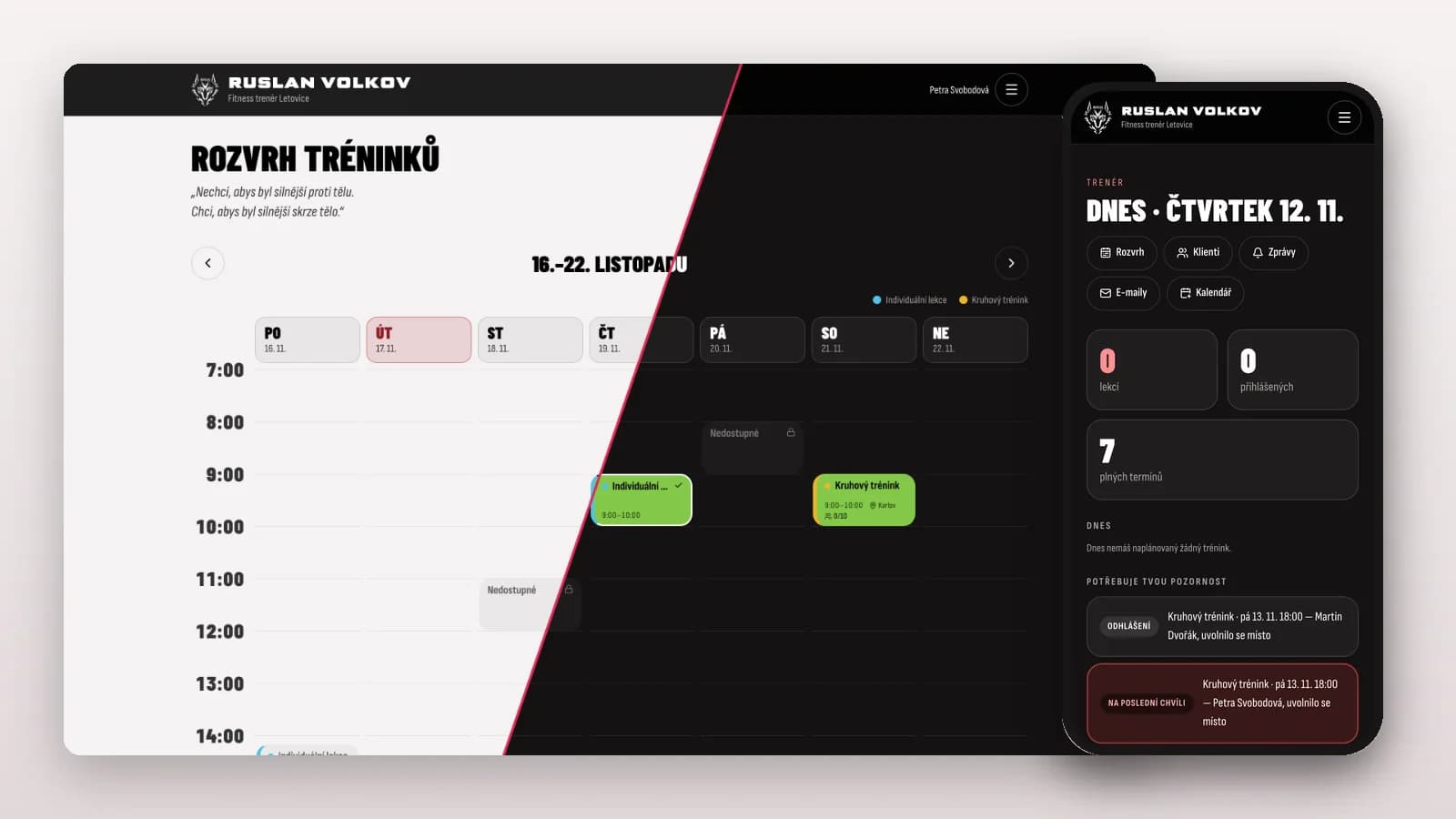
RusliX PRO — training bookings
A custom booking system for a personal trainer. Clients sign up for training from their phones, and the trainer has an overview of every session.
View project →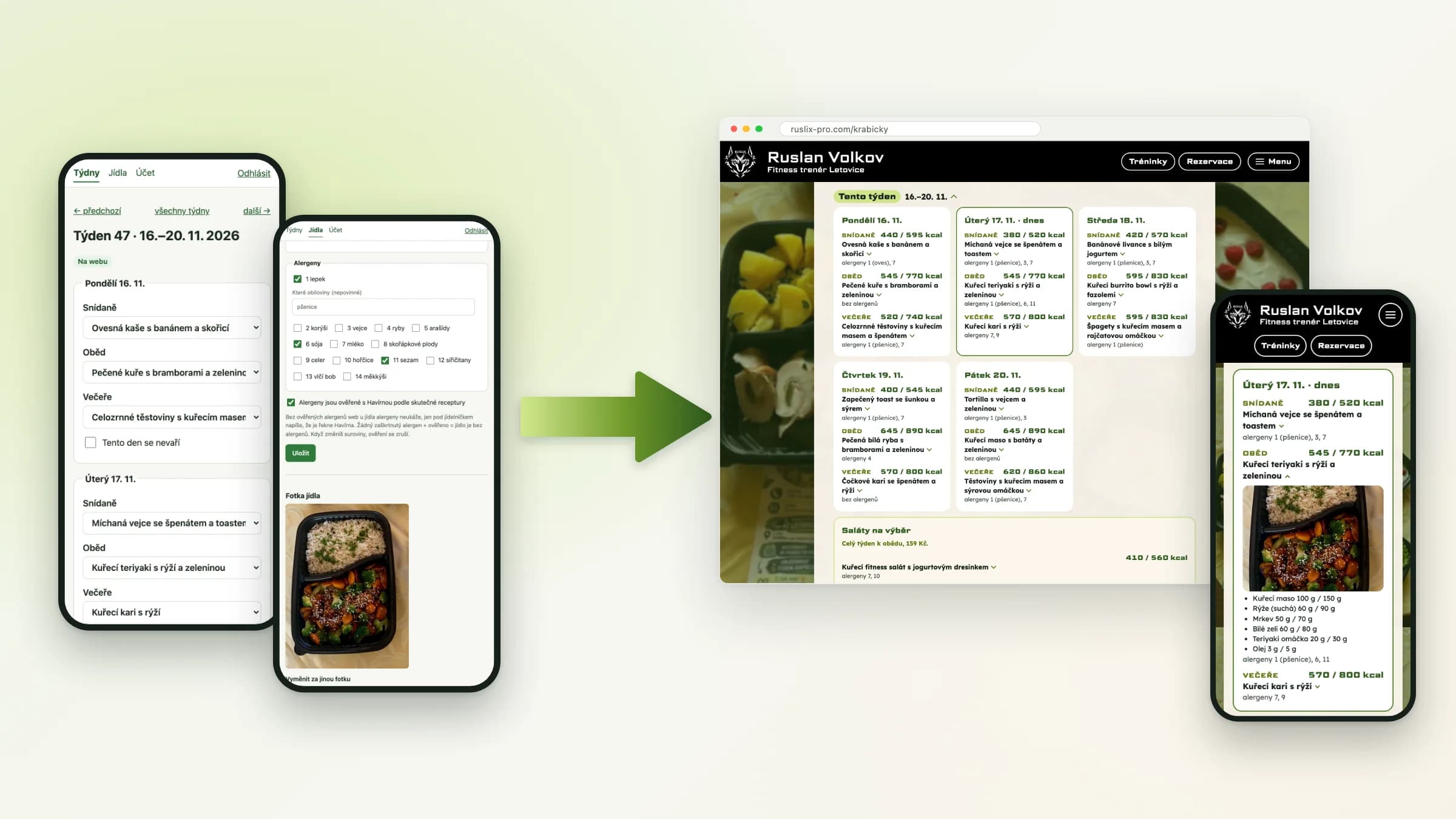
RusliX PRO — meal box menu
A simple custom admin that saves repetitive manual work. The menu is put together on the phone and reaches the website with one button.
View project →
Have an idea?
Leave us a message or give us a call — we'll get back to you promptly and discuss how to turn it into an app or website.
We usually reply within 24 hours.